Schneider Electric sets a new benchmark for smart, sustainable workplaces

Authors

Working on Schneider Electric’s new 10,000m² flagship office in Dubai, The NEST, has been one of those rare opportunities where ambition, innovation, and purpose align. From day one, Schneider Electric challenged us to help them create far more than an office. They wanted a smart, resilient, inclusive workplace that truly reflects their global net‑zero vision while elevating the everyday experience of the people who use it.
I’m proud to say that, together with JLL MENA (project manager) and Gensler (architect), and Summertown Interiors (contractor) we delivered exactly that.
A workplace that leads by example
The NEST has achieved a Platinum SmartScore rating with a perfect 100/100 score - an unprecedented achievement in the region, as well as targeting LEED ID+C Platinum, and WELL Equity certification. These certifications aren’t just badges, they represent a workplace designed to perform, adapt, and support people in meaningful ways.
Performance that speaks for itself
By combining early, cross‑disciplinary collaboration with genuinely out‑of‑the‑box thinking, we helped Schneider Electric achieve:
- 48% reduction in energy costs and GHG emissions
- 33% of annual energy demand met through on‑site photovoltaics
- 75% of construction waste diverted from landfill through circular‑economy strategies
- 88% reduction in parking capacity to promote sustainable mobility
- Daylight access for 81% of regularly occupied spaces and quality views for 77%
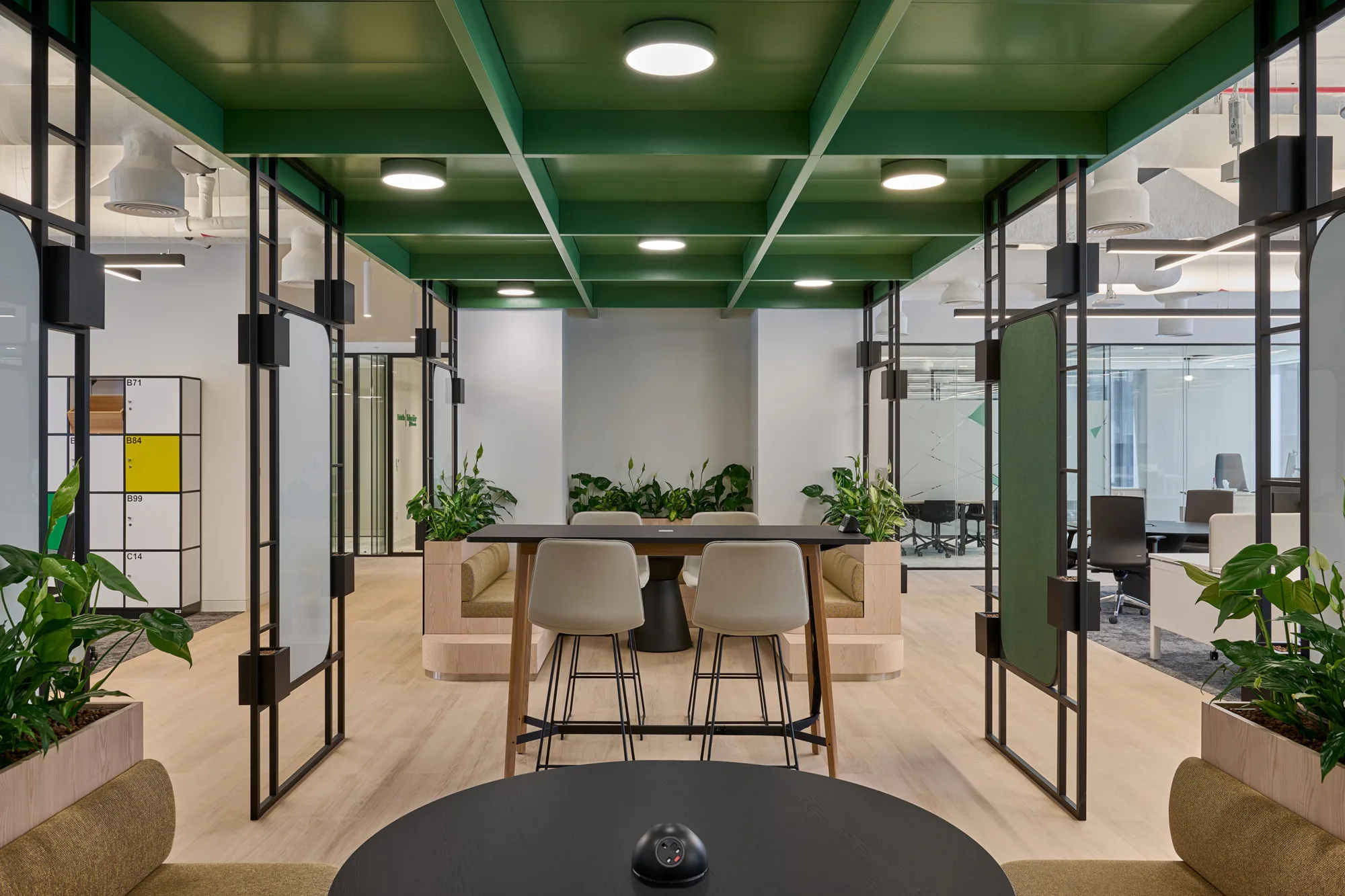
These outcomes demonstrate what’s possible when sustainability is embedded from the outset, not added as an afterthought.
Our approach
Our building services engineering and sustainability teams worked closely, with collaboration and simulation as the backbone of the design process.
- Through early kick‑off workshops, we aligned all key stakeholders around shared goals and clear communication, establishing the channels and decision‑making protocols needed to resolve interdependencies early.
- Advanced modelling, spanning energy, daylighting, thermal comfort, and ventilation, guided every design decision.
- Responsible material procurement focused on EPD‑certified, low‑VOC, and regionally sourced products, despite the challenges of availability in the region.
- Circular construction practices reduced waste and maximised resource efficiency.
Rather than just meeting standards, we focused on re‑engineering systems, improving material selections, and verifying performance at every step.
Lessons learned
Sourcing low‑carbon, EPD‑certified materials in the region remains a challenge, but this project proved that with persistence, supplier engagement, and a structured procurement strategy, it is achievable. The NEST has already become a reference point for what a future‑ready, climate‑responsible workplace can look like in the Middle East.
What makes this project special to me is its commitment to continuous improvement. Every system was designed not just to perform on day one, but to keep evolving through real‑world data and ongoing optimisation.
The Schneider Electric HQ now stands as a regional benchmark for innovation, inclusivity, and sustainability, a living example of Cundall’s Sustainability by Design philosophy. It shows what can happen when a client’s ambition meets a team determined to push boundaries for the benefit of both people and the planet.


