Services (1)
Location
Loughborough, United Kingdom
Client
Loughborough University, School of Architecture, Building and Civil Engineering
Architect
Foster + Partners
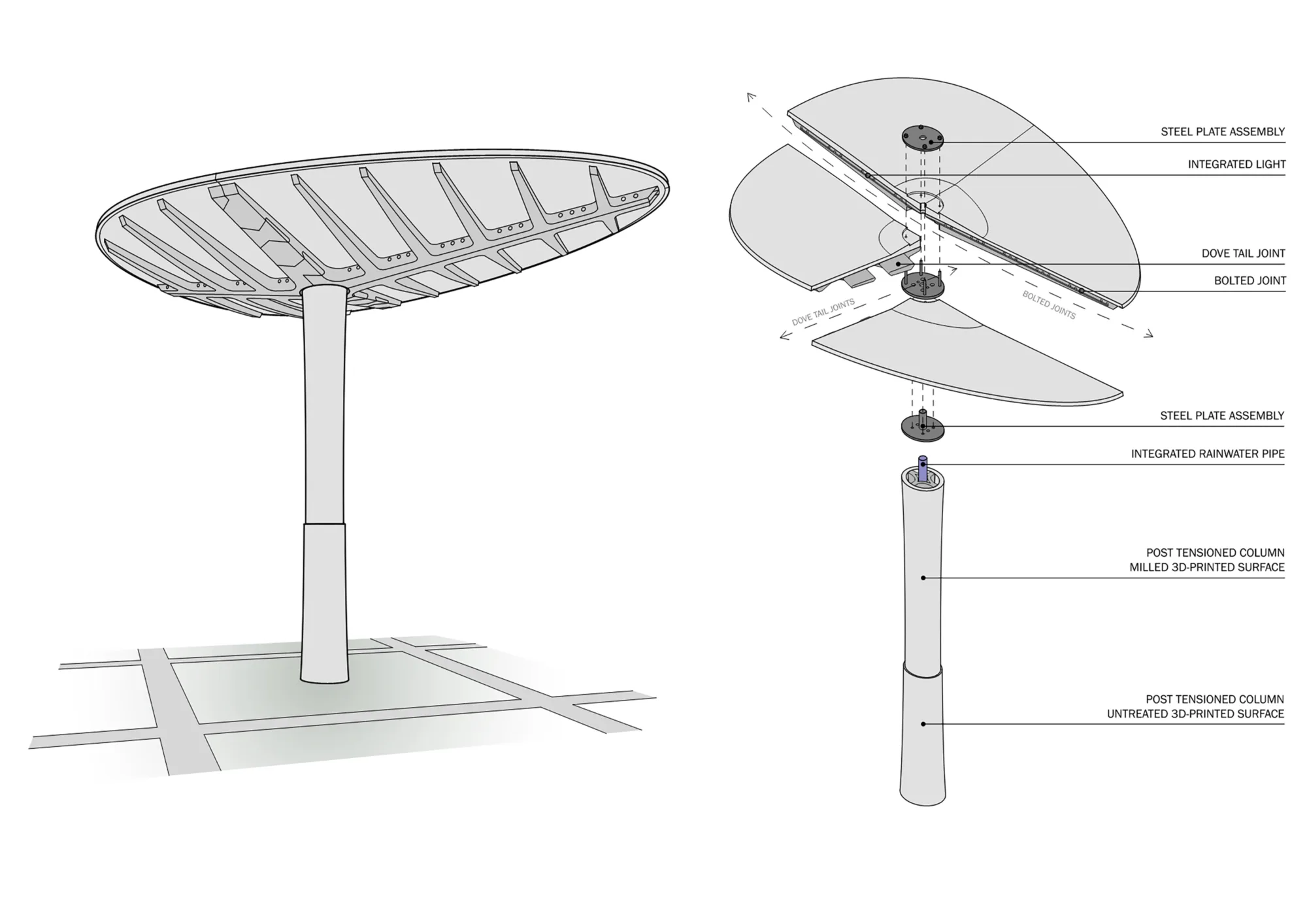
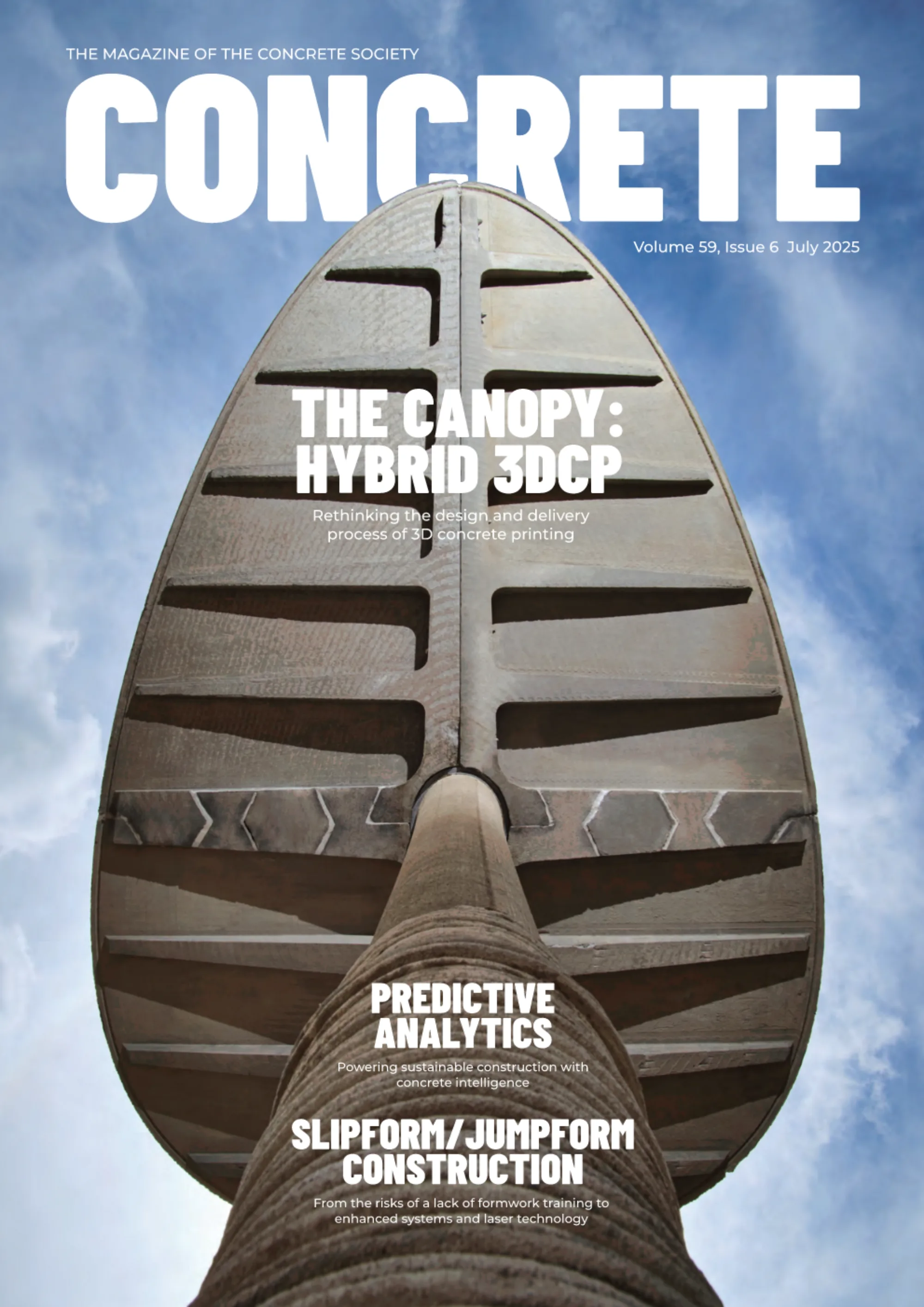
The Canopy is the result of over five years of collaborative research between Loughborough University, Foster + Partners, funded by UK Research and Innovation. It was designed and manufactured using hybrid 3D concrete printing (h-3DCP), a combination of additive 3D concrete printing and subtractive CNC milling.
This h-3DCP approach allows for highly accurate, architectural-scale components to be produced directly from digital models, offering unprecedented flexibility in design and manufacturing.
The Canopy, comprising five precisely manufactured components, demonstrates how new jointing and assembly approaches can be integrated into complex geometries, enabling disassembly and reuse. It also allows seamless integration of functional features such as electrical conduits and rainwater collection, reducing production time, material use, and cost.
Rasti Bartek, Partner, commented: "The project truly tested h-3DCP's capabilities. The final geometry was developed iteratively through architectural design, structural engineering, and lab testing, considering constraints such as robotic reach, tool access, print/mill times, and fresh concrete properties. Given the novelty of 3D printed concrete and its anisotropic properties, physical load testing was essential to verify global behaviour. Permanent monitoring is in place to study long-term effects, including weathering and UV exposure."

It was an incredible experience and opportunity to explore the potential of hybrid 3D-printed concrete in collaboration with the team from Loughborough University and Foster + Partners through this research-by-design project.