Busan Opera House
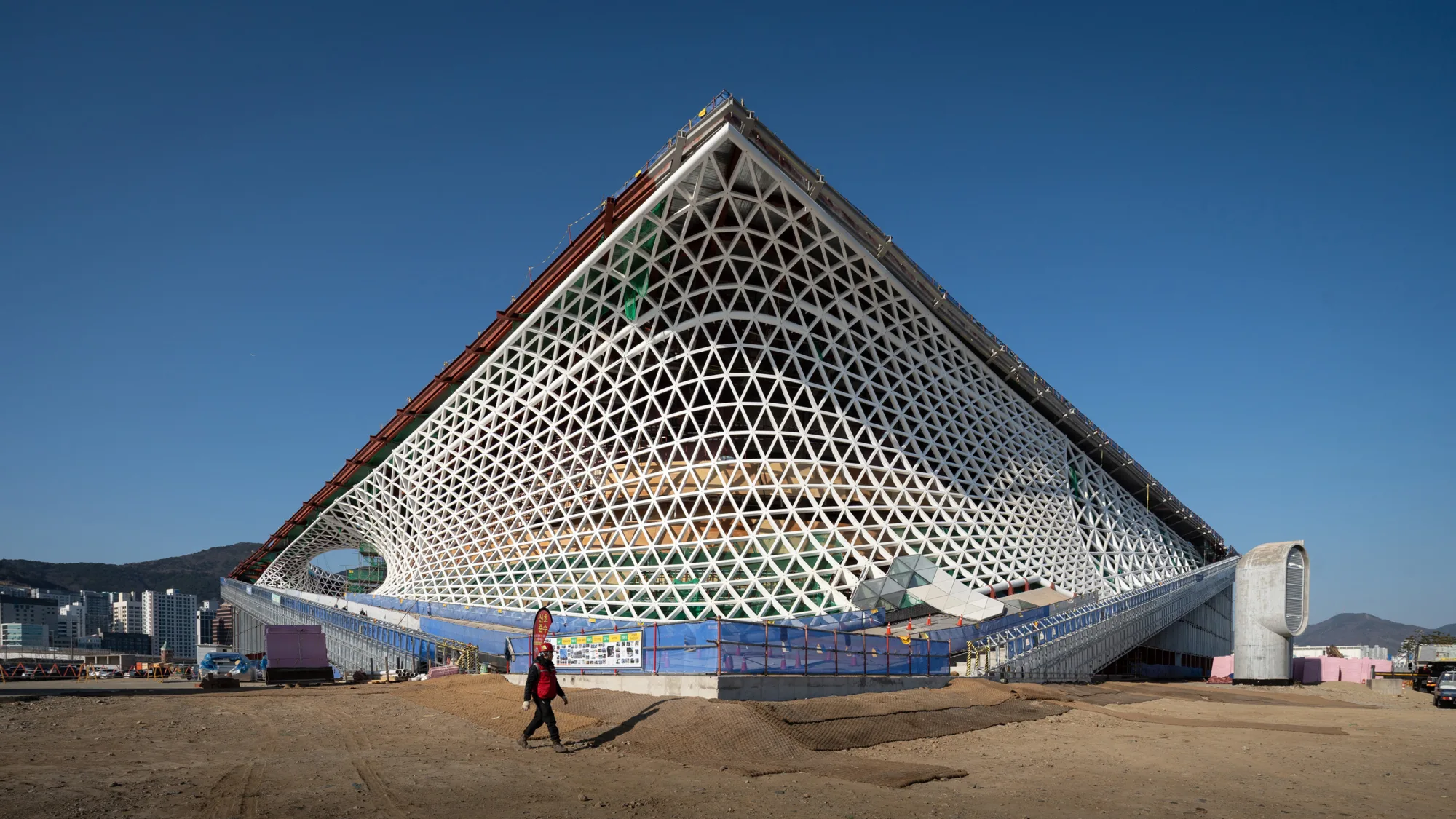
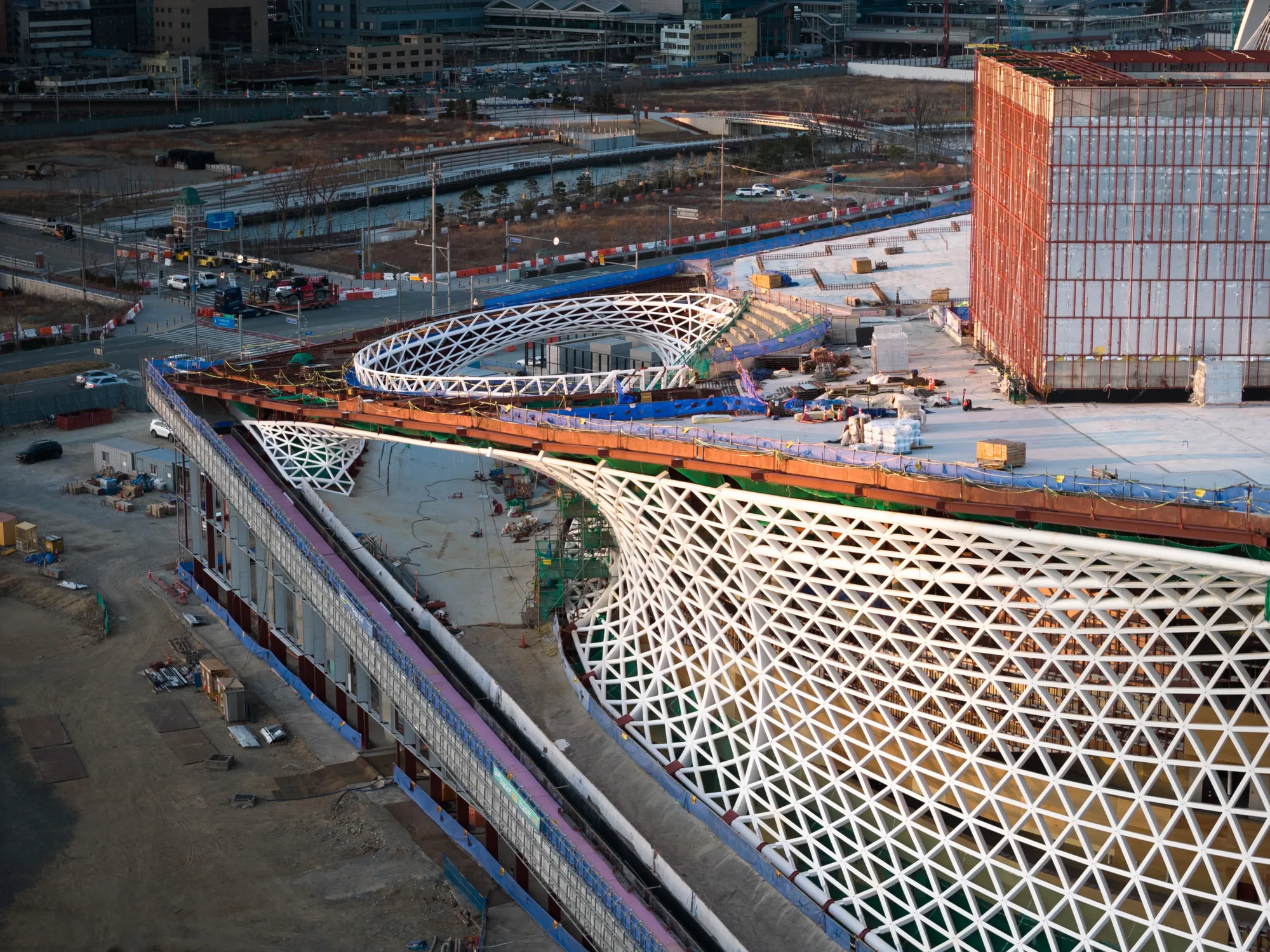
A building envelope sweeping a free-form juxtaposition of glazing and UHPC, conceived as a permeable civic skin of Busan city’s cultural landmark

Services (1)
Sectors
Location
South Korea
Client
HJ Shipbuilding & Construction (HJSC)
Architect
Snøhetta
Cundall was engaged by the client for a new opera house on reclaimed land along Busan’s waterfront. The 48,000 sqm development includes a 1,800-seat auditorium and a 300-seat multipurpose theatre, transforming a historically industrial site into a vibrant cultural and public destination.
The architectural form draws inspiration from the dialogue between land, sea, and sky at the waterfront. Gently bent surfaces reference the trigrams of traditional symbolism, subtly merging and flowing together to create a unified architectural expression. The main foyer wraps around two sides of the building, orienting interior spaces toward the sea and strengthening connections between the opera house, waterfront, and public realm.
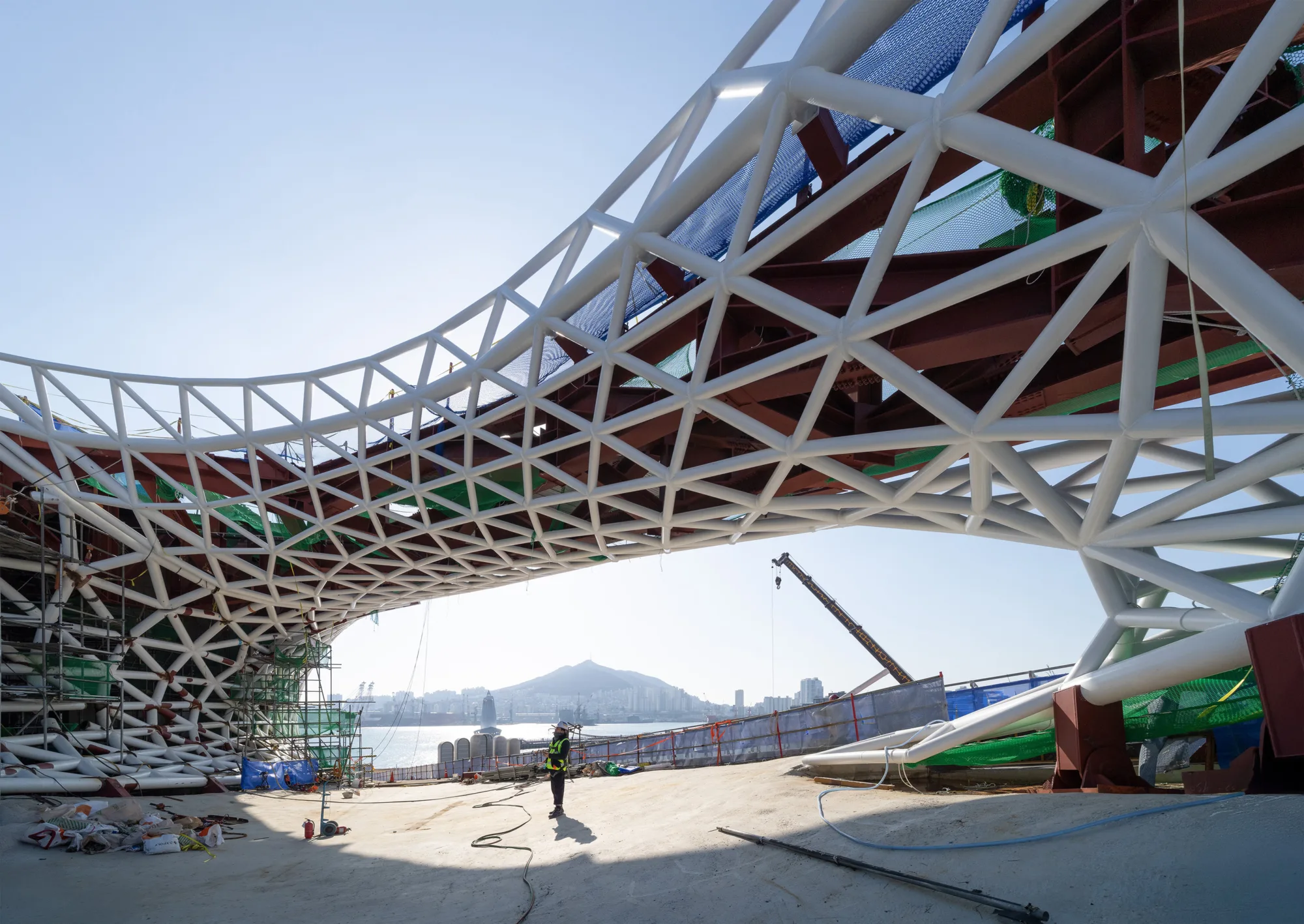
Leveraging our expertise in free-form structures and complex geometric systems, Cundall supported the client throughout the intricate design and construction process. Seamless integration of the highly curved steel structure with the public waterfront walkway was achieved through precise alignment of structure, geometry, and construction strategy.
Dong Chen, Partner, commented "With a team of diverse backgrounds, including computational designers, experienced structural engineers, and design architects, we worked collaboratively with international architects and local stakeholders to translate the architectural vision into a buildable, resilient, and efficient solution."

Parametric modelling and digital workflows were fundamental to the design intent, enabling the design to be realised as a precise and buildable architectural expression.